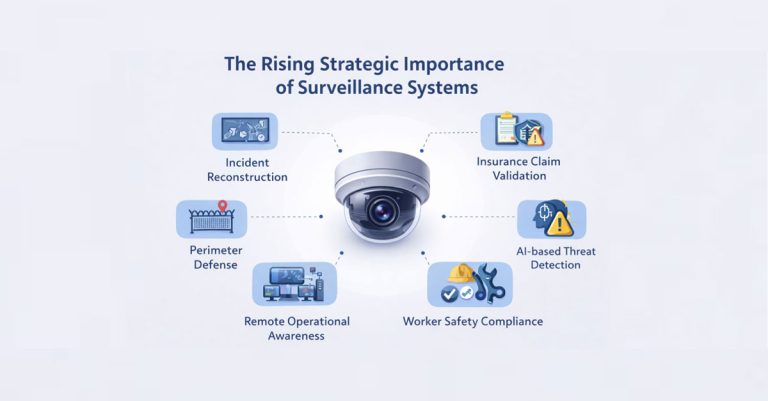
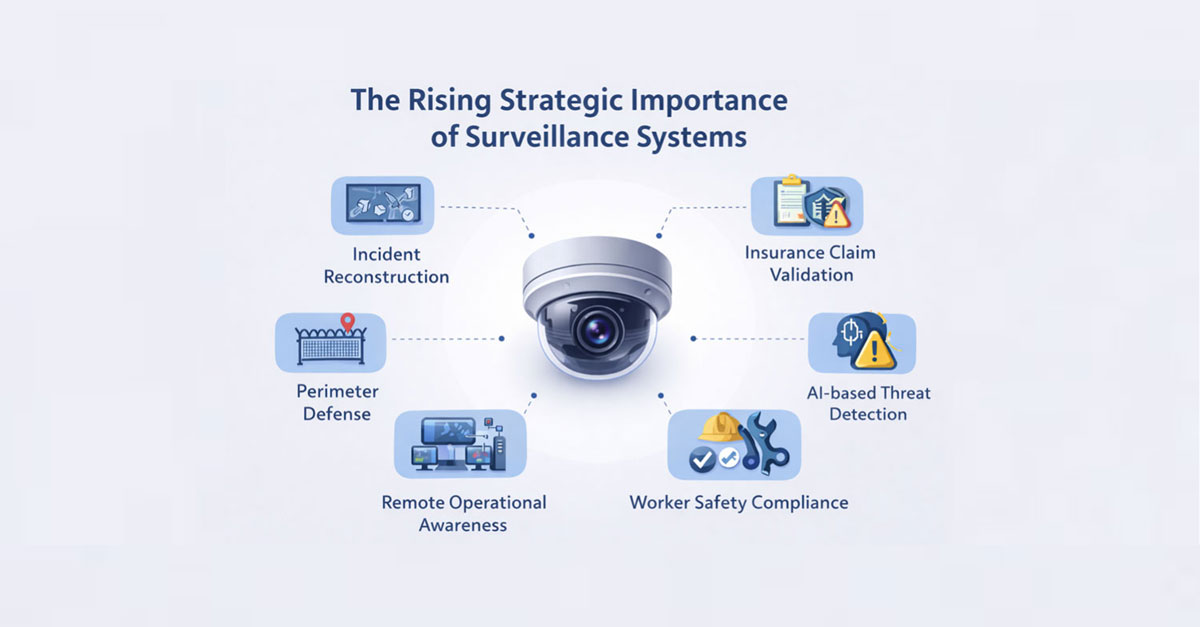
Across industries, surveillance systems have quietly evolved from passive recording tools into core operational infrastructure.
Modern organizations rely on video monitoring not only to deter theft or investigate incidents after they occur, but also to support real-time decision-making, regulatory compliance, worker safety verification, and business continuity. In distributed environments — from logistics hubs and retail networks to utilities and campus facilities — surveillance often represents the only continuous window into what is happening on site.
Yet despite this growing strategic dependence, many surveillance deployments remain architecturally fragile. They rely heavily on shared IT networks and uninterrupted utility power, creating vulnerabilities that can leave organizations blind during critical moments.
When visibility disappears, risk rises immediately — and sometimes dramatically.
If you would like a deeper technical and operational analysis of this risk, we explore the issue in detail in our white paper on resilient surveillance infrastructure.
When Surveillance Fails, the Impact Extends Beyond Security
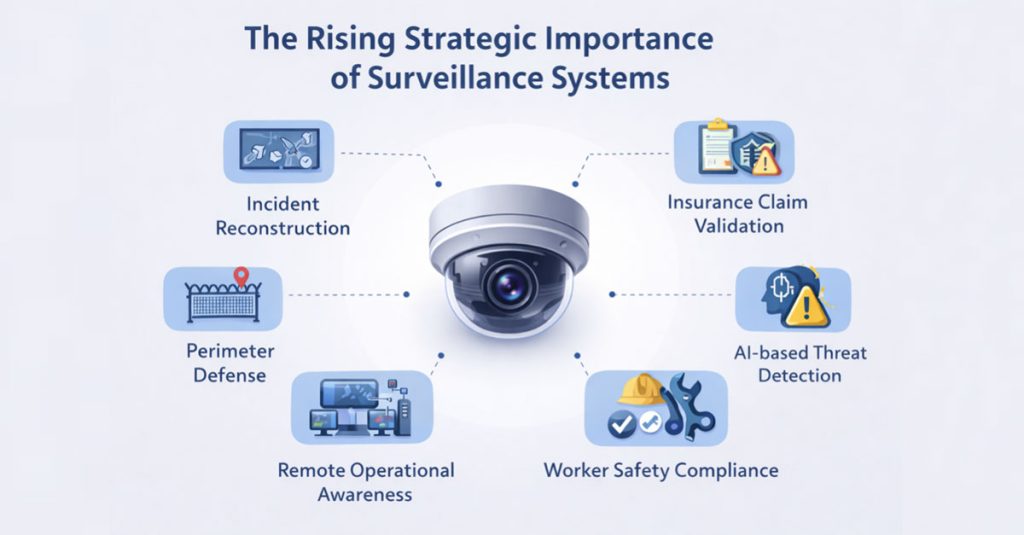
Video systems now play an essential role in incident reconstruction, enabling organizations to understand what happened during safety events, breaches, or operational disruptions. They provide evidentiary documentation for insurance claims and legal defense, support compliance reporting, and enable centralized monitoring of geographically dispersed sites.
Because of this expanded role, surveillance outages can trigger cascading consequences. Organizations may face increased exposure to theft, vandalism, workplace incidents, compliance violations, and reputational damage. In high-risk environments, the inability to access real-time or recorded footage can delay response coordination and complicate investigations.
The financial implications of downtime are well documented. Large enterprises frequently estimate outage costs exceeding hundreds of thousands of dollars per hour, while smaller organizations may incur lower absolute losses but experience proportionally greater operational disruption when monitoring capability is lost.
In many cases, the most dangerous aspect of surveillance failure is that it may go unnoticed until after an incident occurs.
The Hidden Vulnerability of Converged Infrastructure
Modern surveillance systems are typically integrated into broader enterprise IT environments. Cameras transmit data through shared switching infrastructure, corporate wide-area networks, and centralized monitoring platforms — all while relying on continuous grid power.
This convergence provides scalability and remote accessibility, but it also introduces systemic fragility. A single upstream disruption, such as a fiber cut, network congestion event, misconfiguration, cyber incident, or localized power outage, can simultaneously affect multiple components of the surveillance chain.
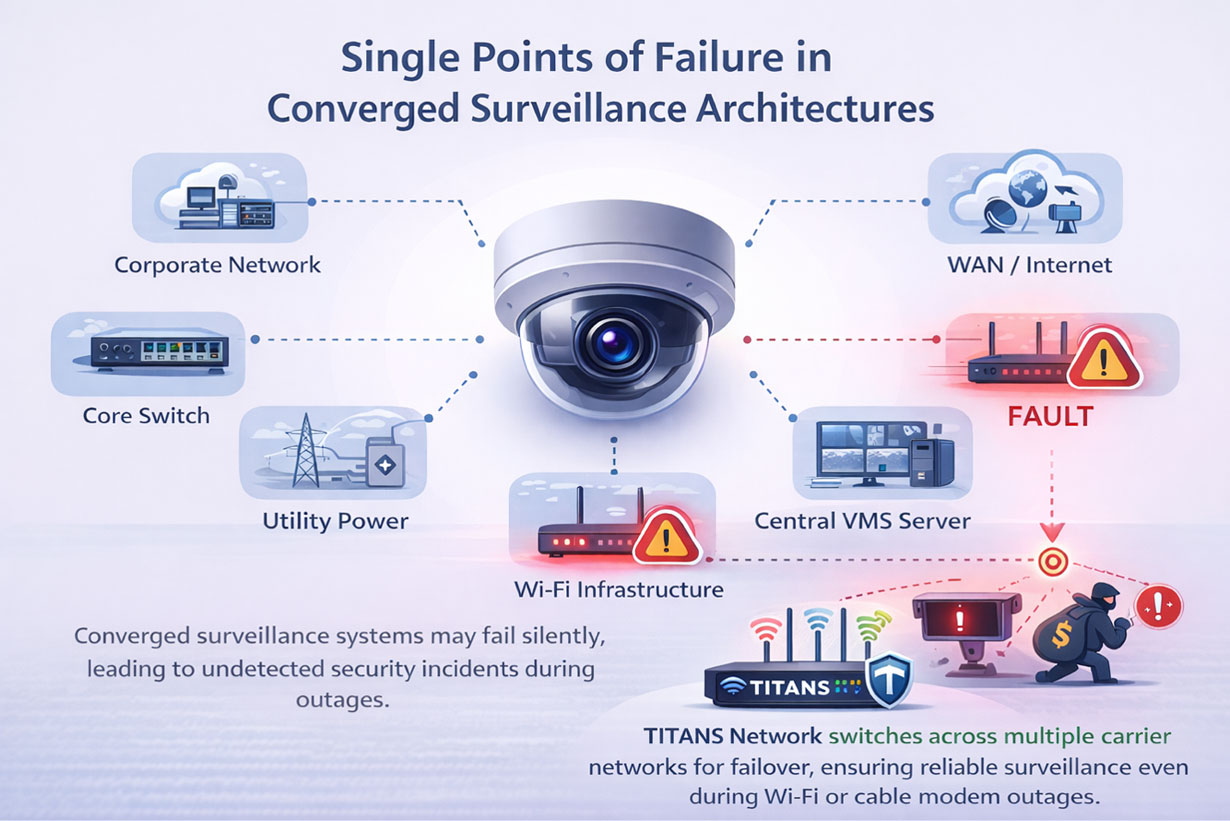
Studies of enterprise outages consistently show that network failures and human configuration errors account for a significant share of service disruptions. When surveillance availability depends on these shared systems, downtime becomes not just possible but statistically likely over time.
The result is growing exposure to “silent failures,” in which monitoring capability is degraded or lost without immediate operator awareness.
For a detailed architectural breakdown of these vulnerabilities — and how they propagate across enterprise environments — please read our full white paper.
View it here.
Why Wireless Surveillance Alone Does Not Solve the Problem
In response to these risks, many organizations are adopting LTE and 5G-enabled cameras, solar surveillance towers, and mobile monitoring solutions. These approaches improve deployment flexibility and reduce dependence on fixed infrastructure, particularly in remote or temporary environments.
However, wireless connectivity by itself does not eliminate availability risk. Public mobile networks may experience congestion during emergencies, localized coverage degradation, carrier-specific outages, or power disruptions affecting base station infrastructure. Devices that rely on a single carrier connection can still represent a hidden point of failure.
Achieving meaningful resilience requires layered redundancy — not just alternative connectivity, but diversity across both network paths and power sources.
Building Surveillance Systems That Can Withstand Disruption
As organizations rely more heavily on continuous video visibility, surveillance architecture must evolve toward designs that prioritize availability and fault tolerance.
Three foundational design principles are emerging:
- segmentation of surveillance traffic from general enterprise networks
- hybrid connectivity models combining wired and cellular paths
- independent failover power infrastructure
Together, these elements reduce the probability that a single disruption will result in complete loss of monitoring capability.
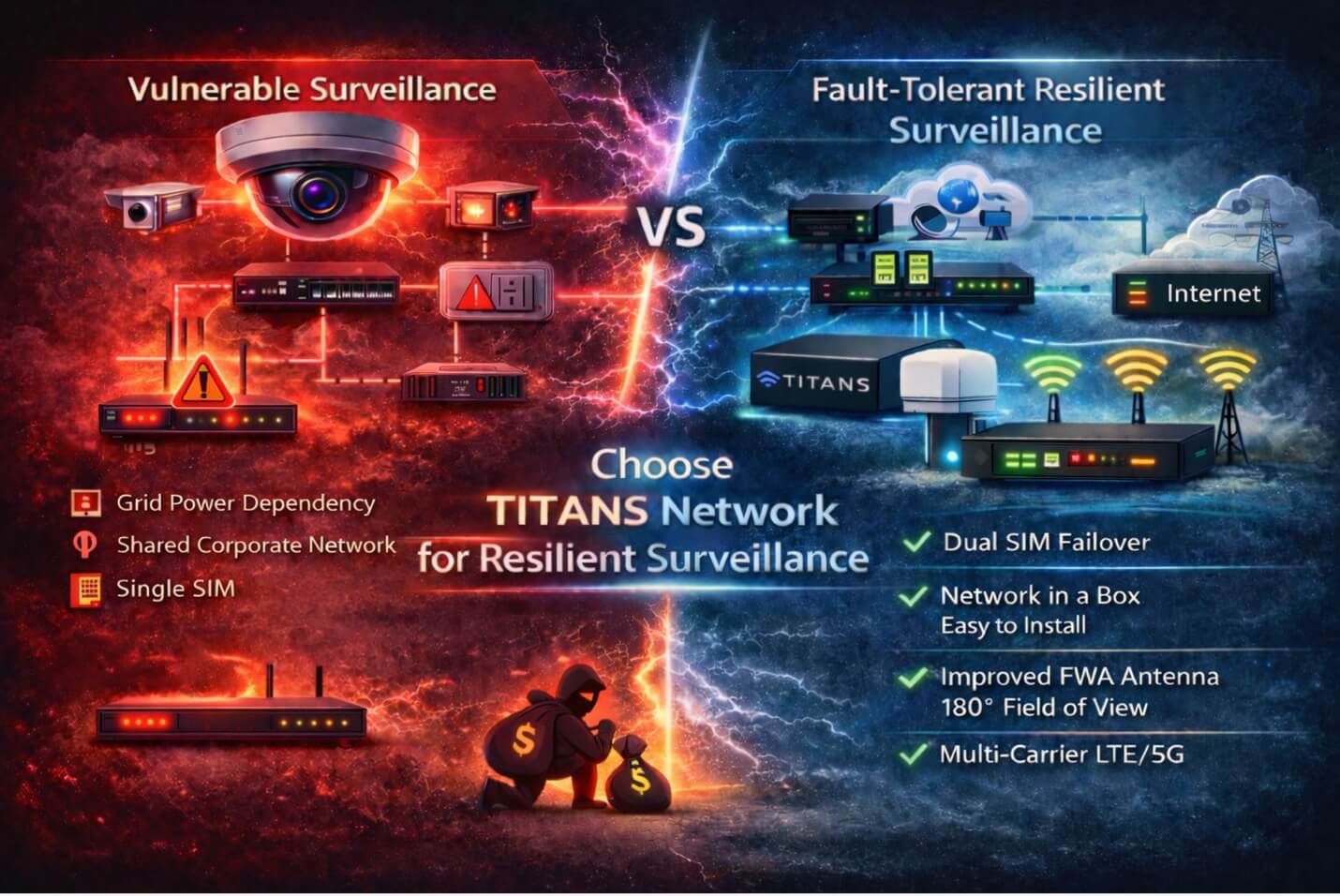
Resilience platforms such as TITANS Network apply these principles by enabling intelligent failover between fixed broadband and multi-carrier LTE or 5G connectivity while supporting power continuity for edge devices. This approach allows both native cellular cameras and traditional wired deployments to remain operational during enterprise network failures or grid outages.
The objective is not merely redundancy for its own sake, but sustained situational awareness during periods of infrastructure stress.
We outline a practical resilience model, including segmentation strategies, hybrid connectivity frameworks, and failover power considerations in our latest white paper.
The Strategic Benefits of Continuous Visibility
Organizations that implement resilient surveillance architecture can achieve meaningful operational advantages. Continuous monitoring during outages supports faster incident detection and response, improves coordination across distributed teams, and reduces the likelihood of evidentiary gaps.
From a cybersecurity standpoint, segmentation helps contain lateral movement during network compromise events. From a financial perspective, resilient surveillance can strengthen insurance claim validation, reduce theft exposure, and limit downtime-related losses.
These benefits become particularly clear when viewed through real operational scenarios. A retail distribution facility experiencing a two-hour network outage may face significant asset risk if video recording stops entirely. By contrast, a system designed with connectivity failover and independent power continuity can maintain uninterrupted visibility, enabling incident prevention and accurate documentation.
Over time, these differences can translate into measurable return on investment.
A Growing Factor in Insurance and Compliance
Insurers and regulators are increasingly recognizing surveillance resilience as a
n indicator of organizational risk maturity. Uptime reliability, evidentiary documentation capability, and failover design may influence premium pricing, claim outcomes, and compliance evaluations.
Organizations that can demonstrate robust surveillance continuity are better positioned to negotiate favorable terms and maintain stakeholder confidence during incidents.
The Shift From Monitoring Tool to Risk Mitigation Platform
Infrastructure disruptions are an operational reality in complex digital environments. As surveillance systems become foundational to safety assurance and business continuity, resilient design must be treated as a strategic investment rather than an optional enhancement.
Hybrid connectivity, network segmentation, failover power capability, and centralized resilience monitoring together enable organizations to move toward telecom-grade availability in physical security environments.
In a world where visibility gaps can carry significant financial and legal consequences, resilient surveillance infrastructure is no longer just about cameras.
It is about maintaining operational confidence when it matters most.